
-
 Home
Home
-
Tables
-
 Robots
-
 Rackets
- Types
- Hardbat Rackets (without sponge)
- Entry Level Rackets - Pips-In w/Sponge
- Entry Level Rackets - Pips-Out w/Sponge
- Intermediate Recreational Rackets
- Advanced Recreational Rackets
- Penhold Recreational Rackets
- Penhold Pro Combos
- Offensive Pro Combos
- Allround Pro Combos
- Defensive Pro Combos
- Oversized Rackets
- Outdoor Rackets
- See also
- Balls
-
 Blades
-
 Rubber
-
 Balls
Balls
-
 Assembly
- Gluing
- Glue
- Gluing Tools
- Side Tape
-
 Gear
Gear
- Clothing and Shoes
- Shirts
- Women's Shirts
- Men's Shorts
- Women's Shorts
- Skirts
- Socks
- Caps
- Men's Suits
- Women's Suits
- Shoes
- See Also
- Cases
- Bags
- Other Accessories
-
 Brands
-
 Info
Info

Guide to Choosing a Table Tennis Blade
Updated: February 1st, 2024See also: Rubber Buying Guide
Introduction
 |
Welcome to our ultimate guide for choosing your next table tennis blade.
As a leading specialist in table tennis equipment, we understand the importance of the right equipment in elevating your game. Whether you're a novice or an experienced player, the choice of blade can make all the difference.
Navigating through an ocean of blades can seem daunting, but fear not! We've created this guide to simplify your decision-making process. Here, we'll discuss key features, explore different blade types, and spotlight top brands and models available in our store.
This concise, reader-friendly guide will empower you to find the table tennis blade that matches your skill level, playing style, and budget. Let's dive in!
Purpose of the guide
This guide provides general information on how to choose a table tennis blade. There is no one perfect combination of rubber and blade, as different players have different needs and preferences. However, there are some popular combinations that work well for many players. Ultimately, the best way to find the right combination for you is to experiment and try out different options. Just because a certain combination is popular or used by top players does not mean it is the right choice for you.
Understanding Table Tennis Blades
Composition and design
The design and composition of a blade play a pivotal role in a player's performance. While the market is flooded with a myriad of wood and composite material combinations, diving deep into the scientific nuances isn't necessary. What players should focus on is understanding the specific materials used in their blade and the resultant effects. As a general rule of thumb, the more plies a blade has, the stiffer it becomes. For instance, most 5-ply blades tend to be more flexible, allowing for greater control and an enhanced ability to generate spin. This isn't to say that 7-ply blades can't produce impressive loops and spins, but their increased stiffness often requires a higher skill level to achieve the same effect.
Importance in the game
The choice of a table tennis blade, and its corresponding rubbers, should align with a player's style and proficiency level. Selecting a combination that doesn't match a player's skill can lead to struggles with the blade's speed and power. Thus, understanding the fundamentals of matching the right blade and rubber to one's individual playing style and level is crucial. While certain blades and rubbers might be favored by professionals, it doesn't necessarily mean they're suitable for hobbyists or recreational players.
Types of Table Tennis Blades
Allround blades
Allround blades strike a balance in the realm of table tennis equipment. They're quicker than defensive blades but fall short in power when playing from a mid to far distance from the table. Different players opt for Allround blades for various reasons:
Beginners to Intermediate Players
Those who are still honing their basic strokes and footwork often lean towards Allround blades. They offer control and precision, making them ideal for players still building their foundational skills. Even when paired with more aggressive rubbers, these blades maintain a controlled speed, due to their flexibility and softness which absorbs the force of each shot, translating to a slower ball speed.
Versatile Players
These are players who rely on a mix of strategies rather than solely power-hitting. They may utilize blocking, spin-heavy chops, or astute shot placements to outmaneuver their opponent.
Long Pimple Rubber Users
Players who predominantly block with occasional attacks, especially those using long pimple rubbers, appreciate the Allround blade. This is because it amplifies the disruptive effects inherent to long-pimpled rubbers.
Some renowned Allround blades include:
- Butterfly Andrzej Grubba
- Yasaka Sweden Extra
- JOOLA Rosskopf Allround
- Stiga Around Evolution
- Xiom Allround S
Offensive blades
Offensive blades can be classified into three distinct categories: Offensive-, Offensive, and Offensive+. While they all generally lean towards faster play, it's a misconception to lump them into a single speed bracket. Each category offers varying degrees of speed, control, and precision.
Offensive- Blades
These blades provide a commendable speed but can still cater to beginners, especially when paired with slower rubbers. Examples include:
Offensive Blades
These medium-fast blades strike a balance, offering players both speed and control. They're favored by many, including world-class athletes. Some popular choices in this category are:
Offensive+ Blades
At the top-tier of speed, these blades are not for the faint-hearted. They demand significant experience, rigorous training, and honed skills to unlock their full potential. Characterized by their bounce, even a gentle flick delivers impressive speed. Many of these blades incorporate advanced materials such as ALC, ZLC, Carbon-Aramid, and TAMCA 5000. Notable examples are:
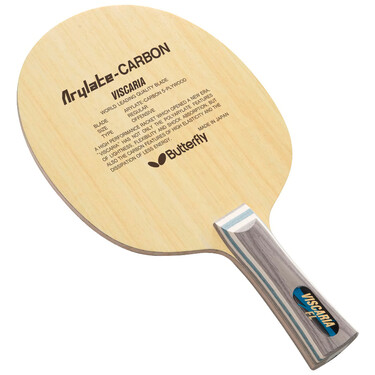
- Butterfly Viscaria
- Butterfly blades used by Zhang Jike and Fan Zhendong
- JOOLA Zhou Qihao blades
- Xiom Stradivarius
In sum, when choosing an offensive blade, it's vital to consider not just speed, but also the player's skill level, playstyle, and desired balance between control and power.
Defensive blades
These blades are tailored for a niche group of players: defensive choppers and blockers. Engineered to facilitate precise chopping, whether close to or distant from the table, these blades cater to a specific playstyle. They're commonly paired with long pimple rubbers on the backhand, which enhance their defensive capabilities.
Some standout choices in this category include:
- Butterfly Diode V
- Victas Koji Matsushita
- Yasaka Sweden Classic
- Stiga Defensive Pro
- JOOLA Chen Defender
Though primarily designed for defensive play, these blades are versatile. They are adept at managing heavy topspin attacks, yet also retain the ability to switch to an offensive mode when required. In essence, these specialized blades are the go-to choice for players seeking a perfect blend of defensive prowess with occasional offensive bursts.
Key Features to Consider When Buying a Table Tennis Blade
Blade material
Top Plies
The outermost layer of the blade is critical as it interacts directly with the ball. Here are some of the popular top plies:
- Limba: Widely used due to its compatibility with hard-Chinese rubbers and fast Euro/Japanese rubbers. It provides a quicker rebound than Ayous while maintaining a degree of softness to offset blade stiffness.
- Ayous: Known for its soft and slow characteristics, it's a common choice for all-around blades.
- Koto: Typically found on medium-stiff ALC/ZLC blades, Koto offers a firm surface ensuring robust rebounds on power shots. Yet, it also offers sufficient "dwell" time, crucial for spinning the ball.
- Hinoki: This versatile wood can either be the sole material for J-pen blades or be a component in multi-ply shakehand blades. Hinoki strikes a balance between stiffness and softness, rendering a delightful tactile experience. Notable fast offensive blades like Butterfly Sardius employ Hinoki.
Core Ply
Beneath the top plies lies the core ply, influencing the blade's overall feel and characteristics:
- Kiri: Predominantly found in Butterfly blades, Kiri offers a blend of softness and speed, making it ideal for players seeking control without sacrificing pace.
- Ayous: A frequent choice among brands like Stiga and Xiom, this wood is soft, emphasizing control. Iconic blades such as the Stiga Clipper Wood and Offensive Classic utilize Ayous cores.
- Balsa: Often integrated with carbon blades, Balsa's primary benefit is its lightweight nature. However, its lightness necessitates a thicker blade to maintain structural integrity.
Blade Thickness
The thickness of a table tennis blade plays a pivotal role in determining its stiffness and, by extension, its overall behavior during play. The construction of the blade, whether it's made of pure wood or integrated with composite materials, can modify these characteristics.
Effect of composite materials
The inclusion of composite materials such as Carbon, ALC, ZLC, Aramid-Carbon, Trimetrix, and Arylate can change the blade's stiffness without significantly altering its thickness. For instance, a blade might be less than 6mm thick but exhibit the stiffness of thicker blades due to the presence of hard secondary or tertiary composite layers.
Thickness and Performance
Below 6mm: Blades with a thickness under 6mm are generally perceived as offering better control, easier handling, and an enhanced ability to produce spin. Their flexibility aids in generating spin, especially during looping strokes.
6mm and Above: Thicker blades, on the other hand, tend to deliver more power and speed. The inherent rigidity in these blades provides a solid platform for powerful shots, making them suitable for aggressive players who prioritize speed over spin.
Skills Over Thickness
It's worth noting that while blade thickness can influence spin production, a player's skill level remains the most significant factor. An adept player can generate impressive spin even with a stiffer blade. Conversely, without proper technique, even a flexible blade won't guarantee optimal spin.
In summary, when selecting a blade, players should consider its thickness and composition in tandem with their own playing style and proficiency level. The right blade can complement and enhance a player's natural strengths and preferences.
Weight
- Weight Categories:
- Light Blades: Typically weighing 82 grams or below, these blades can be easily maneuvered, particularly suitable for those who rely on quick reactions and adjustments.
- Normal Blades: Weighing around 85 grams, these blades provide a balanced feel, suiting a majority of players.
- Heavy Blades: At 90 grams or more, these blades are preferred by players seeking more momentum and stability in their shots.
- Special Cases - Balsa-Core Blades:
- Blades with a balsa core are inherently lighter. Combining balsa with carbon often results in blades that weigh 75 grams or less. These blades provide a unique blend of speed and lightweight feel.
- Overall Setup Weight:
- The combined weight of a blade with two max thickness inverted rubbers is ideally between 180 to 185 grams. This balance provides the player with sufficient heft without compromising on agility.
- Weight and Swing Dynamics:
- The weight directly impacts the swing speed. A common misconception is that a heavier blade leads to more powerful shots. In reality, players often increase the power of their swings to compensate for the blade's weight, leading to more powerful attacks.
- Balance and "Feel":
- Even if a setup weighs in the ideal range, it can still feel cumbersome if the weight balance shifts towards the blade's head. This "head-heavy" sensation can hinder swift movements.
- A poorly designed blade handle, or the use of denser, heavier rubbers (especially with the evolving technology in rubber manufacturing), can exacerbate this imbalance.
- Addressing Imbalance:
- To counteract a head-heavy feel, players can:
- Add a counterweight at the base of the handle. This redistributes the weight and restores balance.
- Attach a rubber grip closer to the handle's end, which can adjust the weight distribution and improve the blade's feel.
The weight and balance of a table tennis blade are not mere numerical values. They deeply influence the feel, swing dynamics, and overall performance. As technology evolves and new materials are introduced into the sport, players need to stay informed and choose equipment that complements their playstyle and physical attributes. Always prioritize comfort and control, and remember that equipment should enhance natural skill, not hinder it.
The handle type
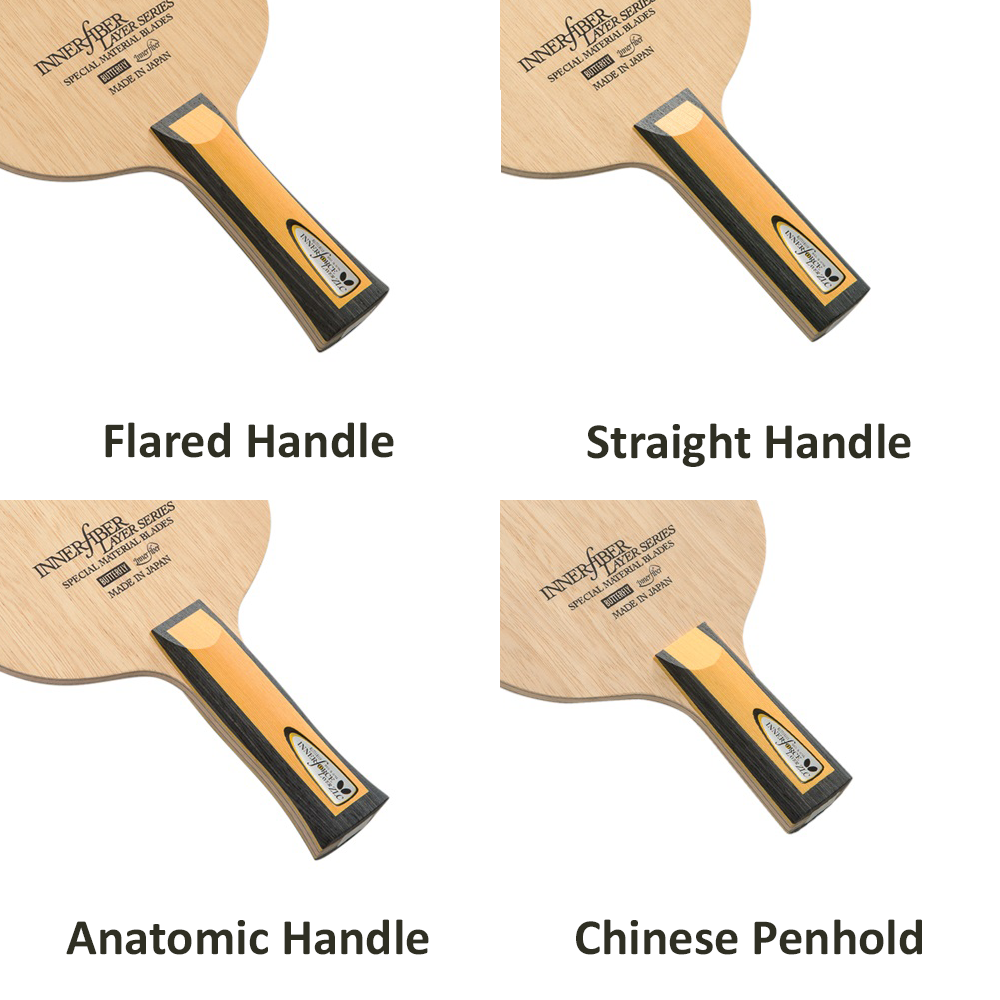 The handle type of a table tennis blade plays a significant role in a player's
performance, influencing grip, control, and overall comfort. There are several
handle types, and the choice of handle is based largely on personal preference
and playing style. Here's an overview:
The handle type of a table tennis blade plays a significant role in a player's
performance, influencing grip, control, and overall comfort. There are several
handle types, and the choice of handle is based largely on personal preference
and playing style. Here's an overview:
Flared (Concave) Handle
- Design: Widens as it moves down.
- Advantages: Offers a secure grip and is less likely to slip out of hand.
- Variations: Come in various shapes, including squarish and oblong designs. Some brands offer a wider base or a narrower design.
- Usage: Most popular among shakehand grip players.
Straight Handle
- Design: Remains consistent in its width from top to bottom.
- Advantages: Easier for twiddling (switching sides). Some players find it offers a purer connection to the blade.
- Usage: Favoured by many European players and those using pimple out rubbers.
Anatomic Handle
- Design: Features a bulge in the middle, mimicking the anatomy of a hand.
- Advantages: Provides a snug fit into the hollow of the palm, offering enhanced comfort.
- Usage: Has declined in popularity but still available in some brands.
C-pen (Chinese Penhold) Handle
- Design: Short and rounded, designed for the penhold grip.
- Advantages: Primarily forehand-oriented but allows for the reverse penhold backhand technique, a modern adaptation.
- Usage: Popular among many Chinese and other Asian players.
J-pen (Japanese Penhold) Handle
- Design: Short but with a squarish blade head and distinct handle design.
- Advantages: Offers a unique grip style, predominantly for forehand plays.
- Usage: Developed by the Japanese and remains popular in Japan.
Pistol Grip/Bolo Grip
- Design: Mimics the grip of a pistol or a bolo knife.
- Advantages: Provides an ergonomic and comfortable grip but doesn't encourage twiddling.
- Usage: Less common but offers a unique playing experience.
In conclusion, while there are general characteristics associated with each handle type, the optimal handle comes down to individual preference. Players should experiment with different handles to find what feels most comfortable and complements their playing style.
Speed, Spin and Control: The Balance
Achieving the optimal balance between speed, spin, and control in a table tennis blade and rubber is a complex task. Manufacturers often face challenges when enhancing one attribute, as it can come at the expense of the other two.
Speed
- Faster blades often compromise on control and spin.
- A blade's speed is influenced by factors such as the type of wood or composite material used, the number of plies, and the thickness.
- Players with advanced techniques and faster arm movements may prefer swifter blades.
Spin
- Spin-heavy blades allow players to generate more revolutions on the ball, offering increased curve and dip in shots.
- The rubber's tackiness and the blade's flexibility influence spin.
- Offensive players often prioritize spin to throw off opponents.
Control
- Control refers to a player's ability to place the ball accurately.
- Allround blades are generally designed to prioritize control over speed and spin.
- New and intermediate players should lean towards blades that offer better control to master their strokes and placement.
Price Considerations
While the price of equipment can reflect its quality, it's also tied to a player's playing level and budget:
Beginners
Typically, beginners should not heavily invest as they're still learning the ropes. Blades and pre-assembled rackets around $50, especially those made in China, are suitable.
Intermediate to Advanced Players
For these players, who have more refined skills and know their game style, investing in equipment ranging from $100 to $150 is recommended.
Competitive Players
For those playing at a high competitive level, they might opt for top-tier equipment starting at $250. Often, these rackets have unique features tailored for professional play.
Brand Reputation
Several brands dominate the table tennis market, each with its unique strengths:
Butterfly
A leading brand in the industry, known for its high-quality blades and rubbers like Butterfly Viscaria and Timo Boll Spirit. Butterfly equipment is often on the pricier side.
Emerging and Established Brands
Companies like Xiom, Andro, Stiga, Nittaku, DHS, Yasaka, and JOOLA offer competitive products, often at a more affordable range than Butterfly. For instance, Stiga is renowned for its all-wood blades like the Offensive Classic and Clipper Wood.
In conclusion, while technical specifications and brand reputation are essential, players should prioritize personal comfort and playing style when choosing equipment. Trying out different blades and rubbers and seeking advice from coaches or advanced players can guide one to make an informed decision.
Understanding Your Play Style:
Blade Types
- All-around Blades: Ideal for beginners to intermediate players. These offer maximum control and spin generation.
- Offensive Minus to Offensive Blades: Suited for those with a higher skill level.
- Offensive Plus Blades: Recommended for players with well-developed basic strokes.
- Defensive Blades: Best for defensive players using long pimples or unconventional rubbers.
Know Before You Buy: It's paramount to understand your game, focusing on the shots or strokes you frequently use. This knowledge ensures you invest in the right blade for your playing style.
Caring for Your Table Tennis Blade:
Maintenance
- Use a quality table tennis racket case, preferably padded, for protection.
- Employ film protectors to keep the rubber surface free from dust.
- Store rackets in cool, dry places.
- Clean rubbers after each use and ensure they're dry before using a film protector.
Replacement Considerations
- Blades: Can last decades unless there's significant damage.
- Rubbers: Depend on playing frequency and intensity. Regular players might need replacements every 3-4 months, while competitive players might change theirs monthly.
Conclusion:
Key Takeaways
- Level and budget are pivotal in blade selection.
- Different materials bring unique qualities to the game.
- Brands like Butterfly lead the market, but others like Xiom, JOOLA, Stiga offer competitive alternatives.
- Enjoyment is key for casual players; control and balance are crucial for competitors.
Final Recommendations
- Beginners: Opt for all-around to offensive minus blades paired with slower rubbers. For those interested in European or Japanese brands, 2.0mm rubbers are recommended.
- Commitment: While you can stick with one blade forever, exploring different blades might enhance your game.
- Avoid Fast Combos for Beginners: Pairing fast blades with fast rubbers isn't recommended for novices.
- Advanced Players: Combining fast blades with quick rubbers can be beneficial for those with the necessary skill level, especially for play further from the table.
In essence, understanding your play style and regularly caring for your equipment will significantly enhance your table tennis experience. Making informed choices and keeping in tune with your evolving skills will ensure you get the best out of your game.
Manufacturer Ratings
See Also
Table Tennis Racket Assembly Guide
Guide to Choosing Table Tennis Rubber
← Blades